Why Representation in Children's Books Matters
The Numbers Tell a Story
Every year, the Centre for Literacy in Primary Education (CLPE) publishes its Reflecting Realities report — the most comprehensive audit of diversity in UK children's publishing. The findings are consistently stark.
In the most recent report, just 24% of children's books featured characters from racially minoritised backgrounds. Only 14% featured them as lead characters. In a country where over a third of primary school children are from minority ethnic backgrounds, the gap between who reads books and who sees themselves in them is enormous.
These aren't just statistics. They represent thousands of bedtime stories where a child scans every page and never finds a face that looks like theirs. Thousands of school book corners where "diverse" means one shelf in the back.
Why It Matters More Than You Think
Developmental psychologists have known for decades that children begin forming racial awareness between the ages of three and five. By the time they start school, they've already absorbed messages about whose stories get told, whose faces appear on covers, and whose lives are considered "normal" enough to be the default.
When a child consistently sees themselves reflected in stories, something powerful happens: they internalise the belief that they belong in narratives. They're not a side character. They're not the token friend. They're the hero.
The reverse is equally true. Dr. Rudine Sims Bishop, who coined the metaphor of books as "mirrors, windows, and sliding glass doors," warned that children who never see themselves in books receive a powerful message: you are not important enough to appear in a story.
Beyond Tokenism
Representation isn't just about putting a Brown face on a book cover. Children are perceptive — they notice when a character's skin has been darkened but their hair, features, family dynamics, and cultural world remain unchanged. That's not representation. That's a palette swap.
Real representation means:
- Hair that looks right. Not a generic outline coloured brown, but actual natural hairstyles — locs, braids, afros, twists, cornrows — drawn with care and accuracy.
- Skin tones that reflect reality. Not one shade of "diverse," but the full spectrum of melanin-rich skin, rendered with the warmth and richness it deserves.
- Cultural specificity. A Yoruba naming ceremony is not the same as a Jamaican nine-night. A Nigerian family's Sunday lunch looks and sounds different from a Ghanaian one. Heritage is not generic.
- Everyday stories, not just struggle narratives. Black children deserve stories about magic, adventure, silliness, and joy — not only stories about overcoming racism.
The Personalisation Gap
Even within the growing "diverse books" category, there's a further gap: personalisation. The personalised children's book market has exploded — you can get a book with your child's name, their favourite colour, their pet's name, even their town. But try finding a personalised book where the character actually looks like a Black child with 4C hair and medium-brown skin, and the options thin out rapidly.
Most personalised book platforms offer a handful of skin tone options and one or two "curly hair" variants. That's not enough. A child's appearance is deeply personal — it's how they see themselves every morning. When the character in their "personalised" book looks nothing like them, the personalisation rings hollow.
What Omo Tales Does Differently
This is exactly why we built Omo Tales.
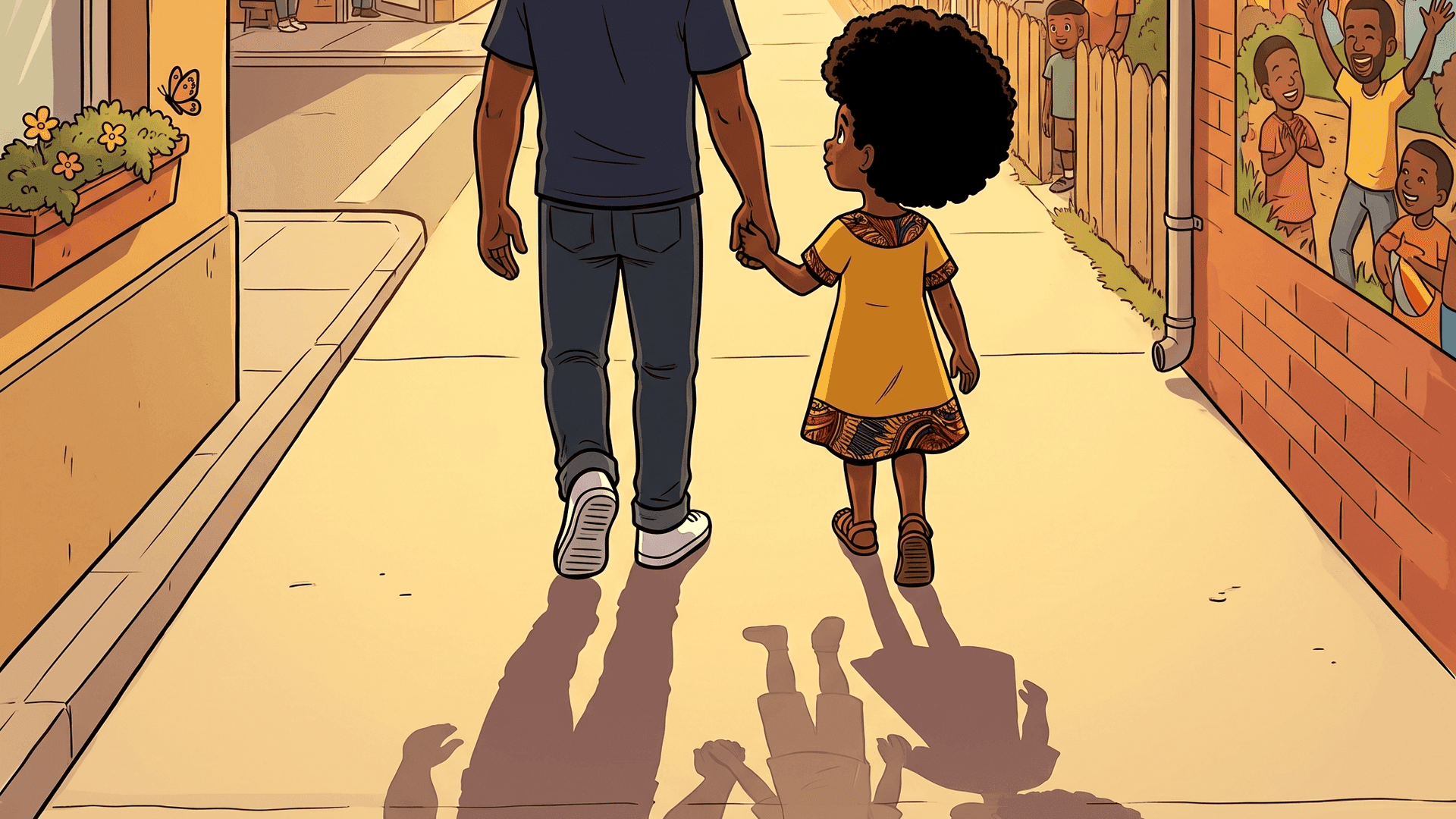
Every character in an Omo Tales book is illustrated from scratch, based on the specific details a parent provides: their child's exact skin tone, their actual hairstyle, their age, their heritage. The result isn't a template with colours swapped in — it's a character that genuinely resembles their child.
But we go further than appearance. Each story weaves in cultural heritage — the foods, the traditions, the family structures, the languages — that make a child's world specific and real. A Yoruba child's story includes Yoruba elements. A Jamaican child's story reflects Jamaican culture. Because heritage isn't decoration. It's the foundation of identity.
Our art style — a rich, painterly approach inspired by award-winning illustrators like Kadir Nelson and Vashti Harrison — treats every child's portrait with the same care and artistry you'd find in a gallery-quality picture book. No clip art. No palette swaps. Every page is a painting.
The Ripple Effect
When a child opens a book and sees a character who looks like them — really looks like them, down to their hair texture and the warmth of their skin — the impact extends beyond that single reading moment.
Parents tell us about children who stroke the pages, saying "that's me!" They tell us about older siblings who finally see a storybook character with their hair type. About grandparents who tear up seeing their culture woven into a bedtime story.
These moments matter. They accumulate. They build a child's sense of self at the exact age when that foundation is being laid.
What You Can Do
If you're a parent, grandparent, auntie, uncle, or family friend — you have the power to put a different story in a child's hands. Literally.
Choose books that reflect them. Choose books that go beyond surface-level diversity. Choose stories where heritage is celebrated, not just mentioned.
And if you want a book where the character truly looks like your child — where their hair, their skin, their culture, and their name are all part of the story — that's exactly what we're here for.
Looking for a Father's Day gift? Our personalised father-child storybook makes the perfect keepsake. See the Father's Day collection →
Share this article
Create your child's story
A personalised storybook with a character that truly looks like your child. Heritage woven into every page.
Start CreatingTry our free colouring page
Get a free personalised colouring page featuring your child — delivered straight to your inbox.
Get Free Colouring Page