Celebrating Nigerian Heritage with Your Child — Traditions, Names, and Stories
Why Heritage Is Sacred Work
There is a particular kind of quiet that falls over a child when they realise, for the first time, that they come from somewhere. That before them there were grandparents, and before those grandparents there were others, stretching back further than any photograph can reach. That their name was chosen, not picked. That the food on their plate carries the fingerprints of women who cooked it over firewood in villages they may never visit.
For children growing up in London, Manchester, Atlanta, or Toronto, that sense of origin does not arrive on its own. It has to be planted. Watered. Told and retold until it takes root.
Passing down Nigerian heritage to a child born abroad is not nostalgia. It is identity work. It is giving your child an anchor so that when the world tries to tell them who they are, they already know.
This is sacred work. And, thankfully, it is also joyful work.
Names Carry Destiny
In Yoruba tradition, a name is not simply what you call a child. It is a prophecy spoken over them. Orúkọ ń ro ọmọ — the name shapes the child. Parents, grandparents, and elders choose names that carry the weight of the family's circumstances, their gratitude, their hopes, sometimes their sorrows.
Consider a few:
- Adémidé — "the crown has come to me"
- Olúwatimílẹ́hìn — "God is behind me," a name for a child born into a season of support
- Ayọmidé — "my joy has arrived"
Among the Igbo, names carry the same weight. Chidinma means "God is good." Chinonso means "God is near." Each name is a small sermon stitched into a child's life, worn every time their teacher calls the register.
The Naming Ceremony
In Yoruba families, the ìkómọjádé — sometimes called the "outing" or naming ceremony — traditionally takes place seven or eight days after a child is born. Igbo families mark a similar moment with igu aha. Customs vary from family to family and region to region, but in many households the gathering involves elders, prayers, and a set of symbolic items that the child is introduced to. Each item carries a wish.
Depending on the family, you may see:
- Water — purity, and a life without enemies
- Salt — flavour, sweetness, and a life that is never bland
- Honey or sugar cane — a sweet life
- Kola nut — longevity and honoured elders
- Palm oil — smooth paths, ease, and healing
- Bitter kola or pepper — resilience, because life is not only sweet
The elders touch each item to the baby's lips or hold it over them, speaking blessings. It is a moment heavy with meaning — a community telling a child, before they can understand a word of it, we have been waiting for you, and we know who you are meant to be.
If you would like a picture book that walks your child through the meaning of their own name in this tradition, we wrote one: The Day You Got Your Name.
Stories and Proverbs: The Old Way of Teaching
Long before bedtime books, Yoruba children gathered around elders for àlọ́ — folktales told in the evening, often featuring tortoise (Ìjàpá), the trickster whose greed and cleverness teach children as much about what not to do as what to do. The storyteller would begin with a call:
"Àlọ́ ò!"
And the children would answer:
"Àlọ́!"
That call-and-response is the heartbeat of the tradition. It tells the child: you are not a passive listener, you are part of this story. Igbo families have their own rich tradition of ifo and akụkọ, and across West Africa the spider Anansi travelled with enslaved Africans across the Atlantic and kept telling his tales in new lands.
Alongside the stories sit the proverbs — òwe, the workhorses of Yoruba wisdom. A well-placed proverb can end an argument, teach a lesson, or comfort a grieving friend.
One of my favourites, and a gentle one for children:
"Bí ọmọdé bá ṣubú, á wo iwájú; bí àgbà bá ṣubú, á wo ẹ̀hìn."
"When a child falls, they look forward; when an elder falls, they look back." A child picks themselves up and keeps running. An elder looks back to see what tripped them — because with age comes the instinct to learn from the fall. Try telling that one to a five-year-old after a scraped knee and watch them turn it over in their head.
Food Is Memory
If you want to understand a culture, eat at its table.
Nigerian food is not a side note. It is a love language. Jollof rice — and yes, Nigerian jollof, the smoky, tomato-rich, party-packed, firewood-kissed original — is the centrepiece of birthdays, christenings, weddings, and any Saturday that needs elevating. (We will not be taking questions from our Ghanaian cousins on this matter.)
Then there is puff puff, the sweet fried dough that makes every child's eyes widen. Moin moin, the steamed bean pudding wrapped in leaves or foil. Egusi soup with pounded yam. Suya from the roadside. Chin chin in a jar that mysteriously empties itself every Sunday evening.
The real magic is not the eating. It is the cooking. Culture gets passed down through a child standing on a stool next to their mother, stirring a pot they are too small to see into. Through a grandmother slapping a small hand away from the jollof pot and then, five minutes later, sneaking them a spoonful. Those are the memories that travel.
Language Plants the Seed
You do not need to be fluent in Yoruba, Igbo, or Hausa to pass the language on. You need only be willing.
A child who learns to say ẹ káàárọ̀ ("good morning") to their grandmother on a video call has already crossed a bridge. A child who knows that mama is grandmother in Igbo, or that ìyá is mother in Yoruba, or that they should greet their uncle with a respectful ẹ kú ilé — that child is growing roots.
Start with what is useful:
- Greetings — ẹ káàárọ̀ (Yoruba, good morning), ụtụtụ ọma (Igbo, good morning)
- Family terms — ìyá, bàbá, ìyá àgbà, bàbá àgbà (mother, father, grandmother, grandfather in Yoruba)
- Numbers one to ten — sing them, clap them, count stairs with them
- Please and thank you — jọ̀wọ́ and ẹ ṣé in Yoruba, biko and daalụ in Igbo
Children are magnificent at languages when there is no pressure. Drop words into daily life and let them catch.
Five Things You Can Do This Week
Start small. These are the moves that take a weekend, not a decade.
- Tell your child the story of their name. Who chose it. Why. What it means. If the meaning is lost to time, tell them that too — that loss is part of the story.
- Cook one Nigerian meal together. Not for them — with them. Put a wooden spoon in their hand. Let them burn the onions a little. Tell them who taught you to cook it.
- Teach three words in the language of your family. Greetings are the easiest gateway. Use them every morning for a week and watch them stick.
- Call an elder on video. A grandparent, an auntie, anyone who carries the old language and the old stories. Let the child hear the rhythm of the mother tongue in a voice that loves them.
- Read a story that centres a Nigerian child. Not a book where they are the friend of the main character. One where they are the main character, with their hair, their name, their world.
A Small Note to Close
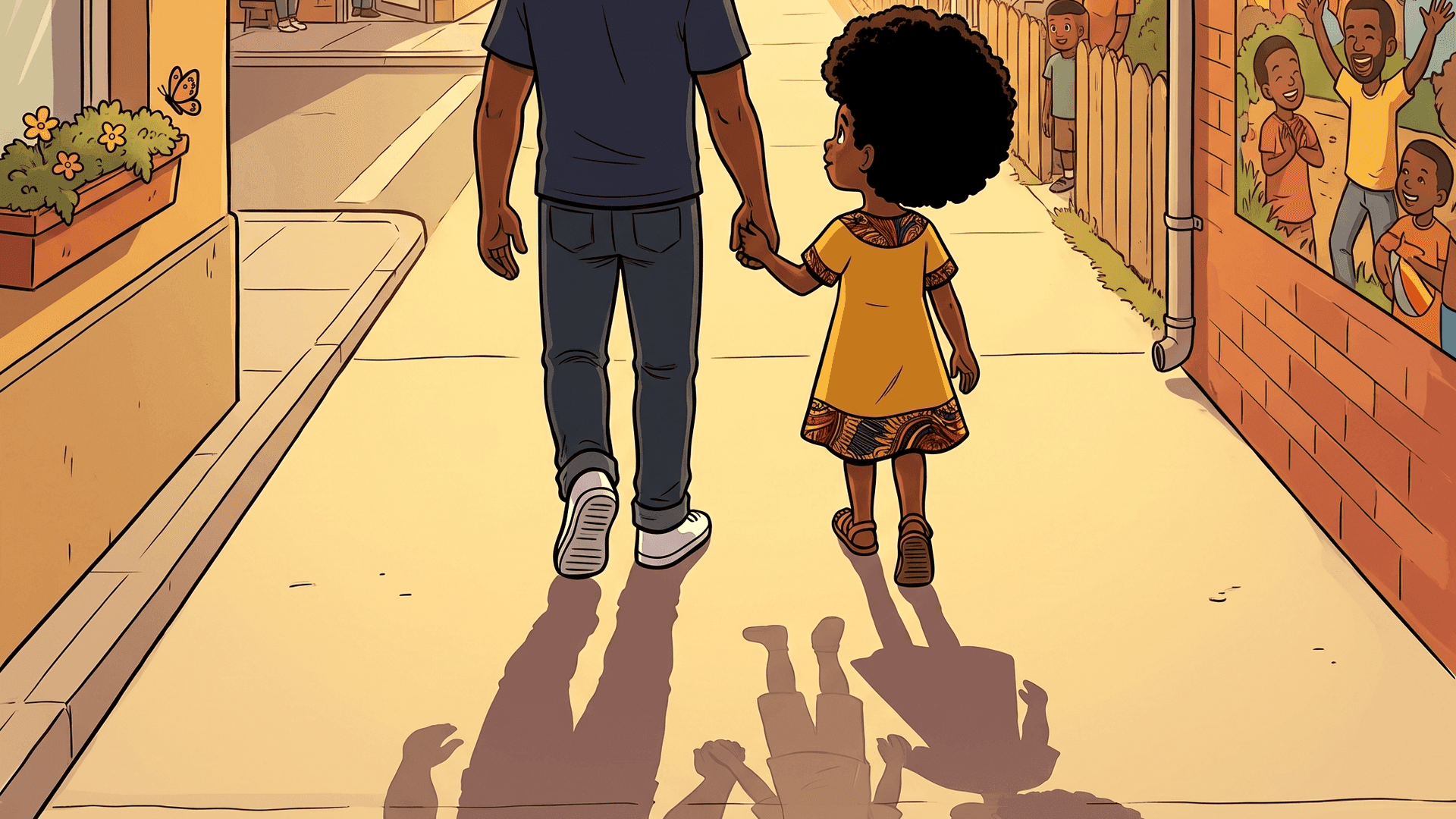
Heritage does not arrive in a single grand gesture. It arrives in a thousand small ones — a proverb muttered over breakfast, a name explained at bedtime, a pot of jollof that tastes like your own mother's kitchen.
We built Omo Tales because we believe children deserve to open a book and find themselves already inside it — hair, name, heritage, and all. Our story The Day You Got Your Name was written to give Nigerian families a way to hand their child the meaning of their name in a form they can hold.
But even if you never read an Omo Tales book, please do this one thing: tell your child where they come from. Often. Out loud. In your language if you can, in English if you must, but tell them.
They are listening. And one day, they will tell their own children.
Share this article
Create your child's story
A personalised storybook with a character that truly looks like your child. Heritage woven into every page.
Start CreatingTry our free colouring page
Get a free personalised colouring page featuring your child — delivered straight to your inbox.
Get Free Colouring Page